
Thumb arthritis
Thumb-base arthritis: understanding your options.
Thumb-base arthritis can cause pain when pinching, opening containers, writing or gripping. Symptoms and X-ray appearances do not always match, so treatment begins with understanding how the condition affects you. A consultation helps determine whether treatment is needed and which approach fits your priorities.
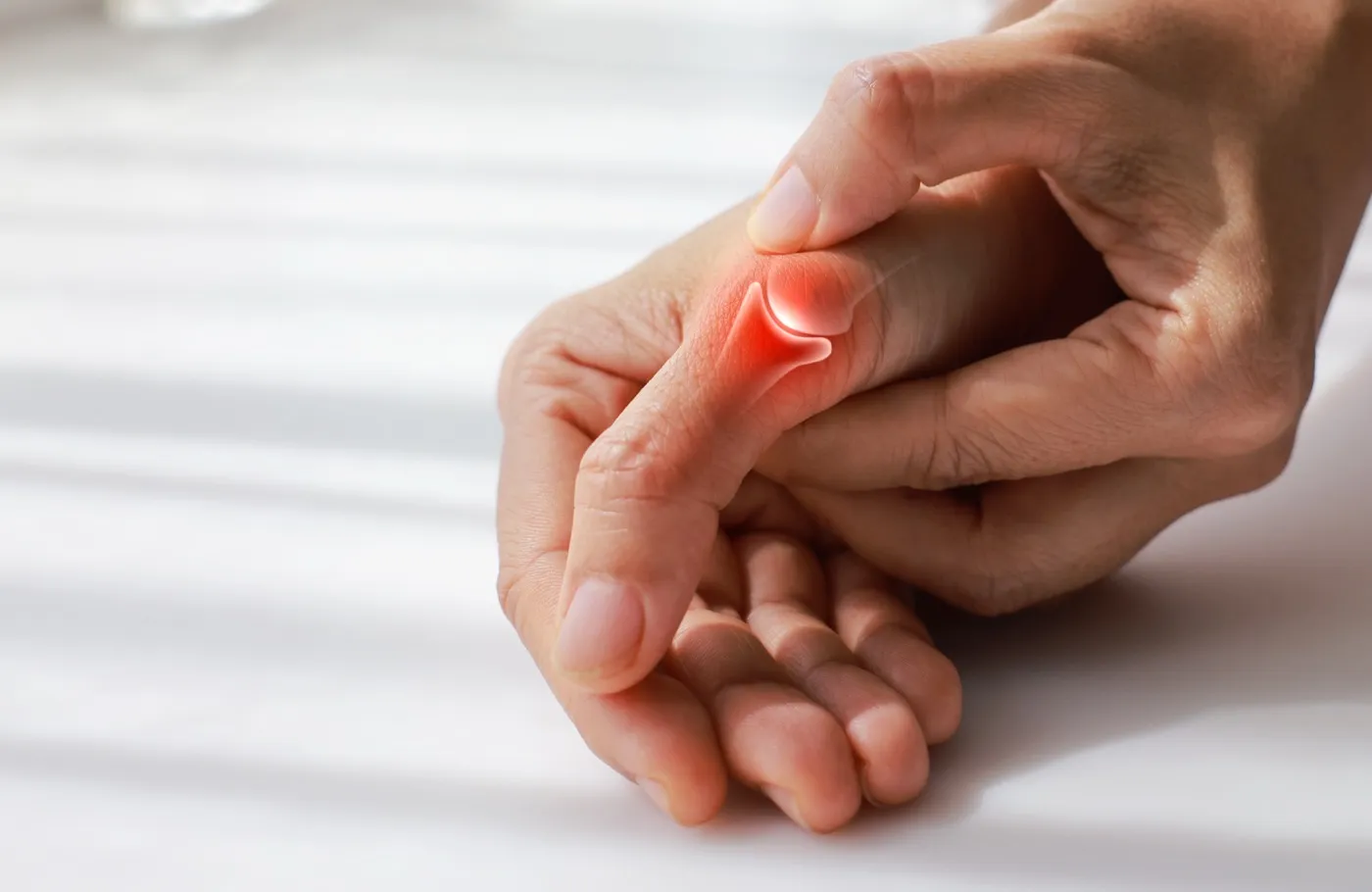
What is thumb arthritis?
The carpometacarpal (CMC) joint connects the thumb to the wrist. It allows the wide range of movement needed to grip, pinch and turn. As the protective cartilage wears, movement can become painful and the joint can feel stiff, weak or unstable. The condition is also known as basal thumb arthritis or trapeziometacarpal osteoarthritis.
Symptoms you may recognise
- Pain or tenderness at the base of the thumb
- Difficulty opening jars, turning keys, writing or gripping objects
- Weaker grip and pinch
- Morning stiffness in the thumb
- Swelling or a bony prominence at the thumb base
- Aching after activity or at rest
Examination and X-rays
Mr Naqui examines the thumb and hand to understand where the pain arises, how stable the joint is and how your function is affected. X-rays show the pattern of wear, but the appearance on an X-ray does not always match how much a thumb hurts. Treatment is guided by your symptoms and priorities, not by the X-ray alone.
Surgery isn’t the first step.
Many people find relief with non-operative treatment. After assessing your thumb and reviewing imaging where appropriate, Mr Naqui will discuss options that fit your symptoms and your daily life.
Your options may include
- Activity modification and joint protection advice
- A specialist thumb splint to support the joint
- Hand therapy and targeted exercises
- Pain relief or injections, where appropriate
When is surgery considered?
If pain and functional limitation persist despite appropriate non-operative treatment, surgery may be considered. The main options are thumb joint replacement, which preserves the trapezium bone and uses an implant, and trapeziectomy, which removes the trapezium. Joint replacement is one option, not the only one, and suitability depends on the pattern of arthritis, joint stability, bone quality and your goals.
Modern thumb joint replacement
For selected patients, the TOUCH dual-mobility implant replaces the arthritic CMC joint while preserving the trapezium. Mr Naqui will explain whether it is a suitable option for you alongside the alternatives.
Explore thumb joint replacement